Tuesday, November 23, 2010

PAT COM REVIEW: the Patagonia Talus Jacket

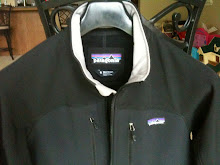
Alright, let me just apologize right now for the horrid pictures.  I was trying to get this done quickly and didn't have the decent camera around, so let this be an indictment of the camera on the iPhone 3GS.

I've owned my Patagonia Talus Jacket for almost a year now.  I was on the look-out for a great softshell and had been using a decent one from the North Face called the Apex Magic Jacket and I got it for a great deal on backcountry.com.  Eventually though I returned it because I just found the fabric to be really rigid.

I then got a nice deal on the Patagonia Guide Jacket from 6pm.com.  They have some great deals on Patagonia from time to time, though their stock right now is pretty low.  I liked the Guide, but it didn't offer me enough insulation.  The wind flowed right through and while I don't live in the coldest of climates (nights might fall to high 20s in the coldest parts of winter), I did want something warmer.  So back it went.

I saw the Talus on the Patagonia site, but at $250, it was out of my league.  However, during one of Patagonia's sales I saw that it was discounted to a reasonable amount.  I saved my pennies and splurged.

I called directly to a few of their stores and found one in black, size small in the Pasadena, CA store.  They were really nice, shipped it quickly, and as far as I know, my credit card isn't being hit with fraudulent charges by the person who took my order (note to person who took my order:  THANKS!).
Anyway, this jacket has been a great piece for me.  One of the reviews on the Patagonia site said that this was a warm jacket, and the person is right.  It is not one of those breezy soft shells.  This thing keeps you nice and toasty inside.  The exterior is supple and quiet.  It definitely feels thicker than the Patagonia Guide Jacket and has a warm, brushed interior.  For athletic pursuits, the Guide is probably great, allowing the air to flow.  My acitivities, I'm sad to report, aren't quite as strenuous.  I just use it as a knock-around, walk-around, play-outside-with-the-kids kind of jacket.

The shape, as you can see above, is somewhat trim in the waist.  It narrows, somewhat like a women's jacket which is not really my preference.  However, it's not too severe, and I think the fact that it's black helps to make that less pronounced.
It has two hand-warmer pockets and two chest pockets.  The shell holds up nicely to rain, even strong rain.  However, I wouldn't personally go stand in a downpour in just the Talus.  This past March, I did take it with me on my trip to Europe (see my Twitter profile pic!) and for the unpredictable pre-spring weather of London, Paris, Florence, and Rome, the Talus was perfect--warm, flicked rain, and in black, low-key.  I did have to pull out my Mountain Hardwear Typhoon hard shell (got that one for less than $100 at REI!) a few times though.  I was walking down Savile Row in London (snooty, I know) and it started coming down cats and dogs.  I put the hard shell on over the Talus, b-lined for an awning and waited the downpour out with a young chap who also was heading my way, though the poor laddy didn't have a Talus and hard shell like yours truly.  Okay, no more British terms.
One thing I don't really love is the lighter grey trim around the neck and zipper.  The neck part is starting to show some light dirt (I shower everyday, I promise!) and I don't feel good about tossing it in the washing machine.  The cuffs are hook-and-loop and function nicely.  The zipper pulls are great though I noticed that the older Patagonia jackets had the same pulls with little nubs to give a little more grip and this jacket doesn't.  Another sign of the recession?
Overall, very happy with this purchase and plan to use it for a long time.  In fact, I broke it out this morning for the 40-degree temps and the light but steady rain.  I'd recommend the jacket to anyone looking for a warm, comfortable softshell that has a supple, quiet fabric.  Patagonia is also offering a hooded Talus this season for $30 more, so if you're going to pick one of those up, please don't get the Pasadena guy to charge my card.

Labels: , ,

Google

Wednesday, October 21, 2009

PAT COM REVIEW: First Look at the Patagonia Nomad Gore-Tex Boot

At the end of last winter, I found a nice little deal on the regularly priced $160 Patagonia Nomad Gore-Tex Boot. I finally got a chance to test them in inclement weather last week when the skies opened up and the rain came a-fallin' down.
They held up nicely and kept my feet warm and dry. The uppers are a great looking and great feeling leather and the contrast-color eyelets make for a snazzy design.
The back of the Patagonia Nomad Gore-Tex Boots have a rubber (or plastic?) piece that goes up the back a bit and gives rigidity to the heal.
Inside is a Gore-Tex membrane that keeps the wet stuff out. This is going to be a great hiking shoe and perfect for those days when I need to walk through some puddles and muck. It has a thickly padded collar and tongue that offers nice support to the ankles too.
And the sole offers some great nubby traction by the folks at Vibram. I hope to get these out to the snow this winter for some hiking and snowballing with the family and from what I've seen so far, they should hold up beautifully. From what I understand, Patagonia has partnered with Merrell to produce their shoe line and so far, the Patagonia Nomad Gore-Tex Boots are winners in my book. More to come once I really give them a test.

P.S. Feel free to check out my other PAT COM REVIEWS here.

Labels: , ,

Google

Sunday, February 1, 2009

A Patagonia Education, Part Three

Part three in a series: A Patagonia Education (photo from prolitegear.com). Last time I covered lessons number two to four.

Lesson Number Five
The Patagonia Down Sweater just, um..., isn't for me. The next item in my fitting room was the Down Sweater in black, again in size small. At 30% off, this jacket was $140, about as good a price as one is going find for this basic piece that Patagonia always carries. I liked the fit and feel a lot. This is a very light weight piece. When you think of classic down jackets, they are packed with feathers and bulky. This one's pared down and, forgive the play on words, light as a feather. The shell feels very thin and I read a review on Backcountry.com that mentions some tearing that the reviewer experienced.

I really liked this jacket, but I didn't buy it for one reason: I thought it looked feminine on me. Now I know the psychoanalysts out there will start accusing me of repressing thoughts, having crushes on my father, etc. But it just looks like a woman's jacket when you put it on! The bigger beefier down jackets look a bit more rugged. It's not all about how a jacket looks, but that does count for something. I think it's the narrower quilting lines that make it look like it was made for my wife. I don't know--it just wasn't for me.

Lesson Number Six
The Patagonia Storm Jacket has a really baggy fit in the upper body. This was one of the final jackets I tried on. It has a tough-feeling exterior fabric and it seemed like it would hold up well in a rough-and-tumble back country environment. When I put it on though, it seemed like I could fit a little person inside the underarm area. The jacket was really nice except for that fact. It's to accommodate layers, I'm sure, but just what exactly will someone be using as a layer? A living, whole goat? (Photo from paragonsports.com)

Lesson Number Seven
The Patagonia Eco Rain Shell is a nice, civilized basic rain jacket.
This is the much (and rightfully so) bally-hooed first fully recycled and recycleable jacket that Patagonia produced a couple of years ago.
It has very simple styling and could work as a rain coat that one would wear to the office. The hood is comfortable (though no drawstring) and detachable and the jacket is lightweight. The mesh lining makes it easy to get on and off and there you go--very straightforward features.

My issue with it was that it was too straightforward. Where's the two-way zipper that versions of the Eco Rain Shell available as recent as 2007 had (according to my old issues of the Patagonia catalog). That would be a helpful touch as the jacket is rather slim fitting. So the bottom hem could use the extra give that a two-way zipper would afford. I actually liked the slimmer fit, but if someone plans to layer, they'd be in trouble unless it was a very thin layer. I tried a hoodless softshell and it was too much. My down vest was way too much. So if you're going to wear it alone, you're golden. (photo from hanon-shop.com)

One thing I didn't get: why do the pocket zippers rest at the bottom of the zip when the pockets are closed? The picture illustrates this. See the Napoleon chest pocket? The pocket is closed and the zipper pull hangs down, as do the handwarmer pocket zippers. Seems to me that if the pockets closed with the zipper at the top of the pocket, gravity could do its thing and virtually hide the zipper pulls rather than forcing them to look like you have a piece of black licorice hanging out of your pocket.

Lesson Number Eight
The Patagonia Down Jacket is still one of the finest pieces around.
True, they didn't have it in my size in black. But I did try on a navy blue one in my size and that thing was nice. The right weight, the right feel, the right warmth--just really solid. Keeping my eye out for a small in black.

So there it is, my Patagonia Education. The Patagonia Palo Alto store was beautiful and the employees very helpful and kind. Looking forward to furthering my education sometime soon.

Labels: , , , , , ,

Google

Saturday, January 24, 2009

A Patagonia Education, Part One

Last Friday the 16th, I sat down to write a new entry for the Patagonia Community. Here's how it started (thanks to the hard-working people at Blogger who make sure that drafts are auto-saved):

I've noticed that when I walk into a Patagonia retail store, I'll rarely ever find anything on sale. I know they have their sales a couple of times a year, but outside of those times, the Patagonia retail stores are havens for full-priced items. I'm going to be heading to one of the Patagonia stores this weekend and am looking for evidence to dissuade me. I'm guessing I won't find much. Nevertheless, I enjoy the Patagonia stores because I get a chance to get up-close and personal with their newer gear and I've always found the sales people to be quite helpful.

So the part about their sales people being helpful remains true, but I was so wrong about the first part. Shortly after I typed the paragraph above, I visited Patagonia.com and to my amazement, found that they had begun a 30% Off Sale. I then went to their store locations page and checked in on the Palo Alto store which was where I was headed last Sunday. I was pleased and surprised to read that the store was also participating. Therefore, lesson number one in my Patagonia education was that sometimes they do have sales out of the blue (though the downturn in the economy no doubt spurred the creation of this sale on; wouldn't expect this in "normal" years).

Usually the Patagonia Winterfest Sale is only a few weeks from this time of year, so to have a 30% Off Sale in mid-January seemed strange, but was welcome. I browsed through the website and found some pretty good deals though I didn't make any purchases. On Sunday I was off to Patagonia Palo Alto where I've visited a couple of times before. Here's a shot I took from Alma Street:
The rest of my Patagonia education last weekend took place within this store. My first clue was the print on the window:
The "30% Off" sign applied to everything in the store (with the exception of books and things like that). The website had some things on sale, and some for full price. Not so at the store. To verify, I asked one of those helpful sales people who reassured me that I wasn't going crazy.

When it actually came time to try on some items, the real education started. I've been a fan of Patagonia clothing and gear for the last 10 years or so, yet much of my admiration has come from reading about their company or perusing their well-produced catalogs. On this day I would be able to try some items on with the intention of purchasing. I grabbed several items and headed to the fitting room and that's where the real education in Patagonia began.

I'm going to post the second part of my Patagonia education this Wednesday. Stay tuned.

Labels: , , ,

Google

Saturday, January 3, 2009

PAT COM REVIEW: The Patagonia Capilene 3 Zip-Neck


Because I'm on a pretty tight budget, I usually plan my purchases quite carefully.  And when buying Patagonia stuff which is definitely on the more expensive side, the planning is even more involved (saving and saving and eBay-ing and saving some more).  Sometimes though, circumstances dictate a quick, last-minute purchase.

Such was the case this past week as we decided to take the kiddos on a quick trip to the snow.  I grabbed some gear from the local REI (more about all of that later) including boots and jackets for the family.  I also grabbed the Patagonia Capilene 3 Zip-Neck for myself.  There were some other options including a Nike Dri-Fit zip neck that had reflective tape which would be perfect for my running and a North Face zip neck that was more fleece-y.  But I decided to take the Patagonia route even though it was $50 compared to the sale-priced Nike ($44) and North Face tops ($34, down from $65).  
I really like that it's lightweight, thin for the warmth it provides, and has a perfect base-layer fit for me.  The material is comfortable and the seams are flat-knit which reduces and practically eliminates any scratchy discomfort.  Below: the stitching along the underside of the left sleeve.
The plastic gripper-tip on the end of the zipper is a nice touch too.  I wore the Capilene 3 during our sledding and snow-ball fight time and it kept me dry and comfortable.  There was no B.O. afterward as far as I could tell (though don't they say you can't smell your own?) and that must be due in large part to the Gladiodor treatment that Patagonia gives their Capilene stuff.
The Patagonia Capilene 3 Zip-Neck definitely isn't a wind-blocking piece.  I walked outside today while it was a cool 46 degrees and a little breeze hit me like a Yeti.  I'm also wondering how it will do with pilling.  Will it look like my dad's navy blue acrylic sweater, circa 1981?  I noticed that in a customer review on the Patagonia site of the Stretch Velocity Full Zip Jacket, a customer said it was great except for the pilling after only a short amount of time.
For now though, the Capilene 3 is a winner.  Yes, I could have chosen the less expensive options (and did recently when it came to buying a shell; more to come on that later), but what would I have blogged about?
Learn more about Patagonia Capilene base layers here.

Labels: ,

Google

Tuesday, August 5, 2008

PAT COM REVIEW--The 2008 Critical Mass Bag

My history with the Patagonia Critical Mass Bag goes back to about 2001 when I received as a gift my first Critical Mass. Since then I've had the updated version which was the first with a dedicated laptop compartment, the Half Mass, and the Lightwire Tote. In fact I even found a great bargain and strayed to the fashion side of the spectrum--not exactly the "Dirtbag" culture that Patagonia expounds, sorry--with a Jack Spade bag for a little while (very utilitarian for a fashion bag but far from the functionality Patagonia offers). I've finally come back to the Critical Mass and received the new Fall 2008 version yesterday. I'm going to give some positives (and there are many) followed by a couple of concerns. Here are my thoughts about it.
SIZE
First of all, it's big. The Patagonia website has it listed as 21 x 16 x 6.5 giving it 2,800 cubic inches of space. It seems significantly larger than the previous version. My guess is that the redesigned top flap adds to that feeling because it now overlaps the top opening to increase the ability to prevent water from entering.
When I put it on my shoulder, it looks almost as if I am carrying a folded garment bag--it's that big. Now I knew what I was getting into. I very well could have gotten the Half Mass with about half the volume of the Critical Mass, but I like knowing that I can throw whatever I want to into the bag and it will handle it just fine.
COLOR
The color of the bag from the Patagonia website and catalog pretty accurately portray the bag's actual color (my screens are on an iMac and a Lenovo T60 in case you're wondering if your screen would show the color in a similar way). I ordered "gravel" and it's a nice grey in natural light and has hints of brown in artificial light. For the record, I visited eBags, a popular internet bag retailer, and their pictures are completely overexposed. Don't rely on their pictures for the colors as the actual bags are several shades darker.
DESIGN
When I saw the first pictures of the CM this past winter, I noticed that the interior "wall" of the bag was cut lower than the overall height of the bag. I was concerned that this might lead to contents spilling out. Upon testing however, it seems like that side is high enough to adequately keep files and other contents safe. I don't know how the Half Mass would do with this, but it appears fine on the CM. Note the top portion of the regular sized white binder that peeks out the top. The wall offers plenty of coverage against spilling.
I also like the extra expandable pocket on the front, the first time the Critical Mass has had this. It has a stretchy top border that gives it some extra volume and a Velcro patch to keep contents secure.
Yes, that's a regulation NFL football (go Chargers) that is being swallowed up by that pocket. Side note here: the stitching on the top border of that pocket is zig-zagged. Reminds me of the stitching on my college roommate's Tevas that he wore back in 1993. However, I'm guessing that the stitch pattern helps to add durability to the piping.
LAPTOP COMPARTMENT
I like the new laptop compartment. It now has a flap for added security/water deflection but the biggest and best change is that the padding on the bottom of the compartment is now sewn in place and not a flap that can get flipped up or down. The older version was not sewn in place so when I put my laptop in, the padding would sometimes be between the laptop and the ground and sometimes would not and would be useless. Nice change.
Also, the compartment is big, which I don't mind because the next laptop my company is giving me will have a widescreen. Here's the compartment with my current 15 inch Lenovo T60:
Note that I pushed it all the way to the left so you can see the extra space on the right. The laptop looks a bit shrunken in that wide pocket. One other hidden gem that I found (and that I don't think is listed on the website or in the catalogs) is the inner mesh pocket that would work well for carrying the power cord or a water bottle. Great idea.
OTHER FEATURES
The other new feature that I like is the zippered external side pocket that replaces the old mesh pocket.
It has a mesh pocket inside as well as a slot that is mildly protected with a Velcro strap (which I flipped up in the picture) and a nice key ring holder that detaches (visible just at the top of the compartment). I think pen slots somewhere in there would have been convenient too but perhaps Patagonia doesn't view this as a serious office bag (like the Lightwire Tote and the Lightwire Brief).
The other end has the traditional pleated pocket slot though if I'm not mistaken, this one differs from past versions in that the pleated portion is now stretchy mesh as opposed to the fabric that is used on the rest of the bag, thereby giving it a bit more capacity.
I have placed a typical 24-ounce cycling water bottle in it so that you can see the relative size of the pocket.
Another feature is the back pocket. I like that it's now secured with a zipper. And like the rest of the bag, it is big. Again, a regular sized one-inch binder fits easily. I angled it in the pocket to give some proportion.
I also like that newly padded top handle. And the zipper pulls are still the best around--dual density and grippy.
The zipper on the front flap of the bag has been moved lower for easier access. From the website pictures, I thought that maybe that would also shrink the capacity of the pocket if the area above the zipper was not open or rather, was sewn shut. However, it is indeed open.
A potential problem could be that items may get shuffled around (especially when raising the flap open) and move above the zipper so that when you unzip the pocket, little things may get stuck above the zipper making them awkward to reach, especially if the bag is hanging on your shoulder. I haven't yet had the bag for long, so I'll have more experience with this once I get into the daily grind.

There are also a couple of Velcro patches on the underside of the top flap. I believe this is to secure the top flap and keep it half-open so it's easier if you're constantly putting things in or taking things out. Clever thought.
CONCERNS
That all leads me to a couple of possible negatives with the bag. First, take a gander at the stuff on one end of the shoulder strap:
Not exactly "the cleanest line." There's a buckle, excess strap, a clamping mechanism, and a stretchy band to collect the excess strap. I realize that part of this was to correct the biggest gripe about the old version and that was that the strap could not be shortened enough. This solves the problem but makes for a somewhat unsightly bundle. Also, the fabric for all of the straps is now a seatbelt-looking material. If the seatbelts on old cars are any indication, fraying could be possibility down the road. Time will tell.
My biggest concern though has to do with the fabric and this could be major because what good is a bag if the very material from which it's made isn't tough enough? This fall 2008 version of the bag is made with recycled polyester which I applaud. That's consistent with Patagonia's philosophy and an example to all of us of making the most of our precious few resources.
However, the fabric is now 1,200-denier polyester as opposed to the 1,680-denier fabric used on previous versions, including even the spring 2008 bags. The difference is literally tangible. My bag feels much more pliable and less rigid than previous versions. The waves in the fabric and the resulting shadows in the pictures above give a sense of this. In this case, rigid is better if it means that the fabric is going to be more durable. Also, the lining is now 200-denier polyester as opposed to the 210-denier that older versions used. In fact, my first version of the bag back in '01 had 1,680-denier ballistics fabric on the outside with 420-denier packcloth on the inside--a tough, tough bag and that was what I LOVED about it.
Again, the recycled factor may partially justify the lower denier and maybe the difference between 1,680 and 1,200 won't appreciably affect durability (only the good folks at Patagonia could probably tell us that), but still. So the fabric toughness has deteriorated while...
The price is $21 more! The previous two versions were $99 and this one's $120. That hurts, that really hurts. I love the quality, I love the improvements, I love that they listen to their customers. But if you're listening, Patagonia employees (and I'm hoping my buddies and blog supporters Free and localcrew might be), please watch the prices! I know quality costs more, but $21 more? In these economic times? For what appears to be lesser-quality materials? I realize no one forced me to buy it, but I hope that the company does take note of the fact that their customers take note of the price hikes (the Prefontaine jacket is now $90?!).
I hate the "Patagucci" stereotypes and from all I've seen, that's just not the way the company is interested in coming across, nor is it consistent with the company's values. But something like this only adds to that false perception.
THE BOTTOM LINE
In the end, I really do like this bag and plan to get a lot of use out of it. In fact, this weekend I'm headed out of town for an overnight trip and I'm guessing that this bag is going to be ideal.
My love affair with the Critical Mass is back on. In my humble opinion, it's overall been improved and well-thought out as Patagonia has considered customers' input and re-designed accordingly. On the whole, (with one final note of price protest!) a job well done.

Labels: , , , ,

Google

Friday, July 11, 2008

PAT COM REVIEW: The Lightwire Tote

Awhile back, for various reasons, I gave up my Critical Mass and went with the Half Mass.  Recently, I decided to leave the Masses altogether and purchased a Lightwire Tote.  It's been a really great bag and has turned out to be ideal for my laptop, files, iPod, wallet, Altoids, etc.
I picked the Midblue color which is darker than this picture shows.  My first impression was that it's bigger than the pictures from the Patagonia catalog and website might lead one to believe.  It has a generous amount of room and the zippers are beefier when looked at up close.  I put a quarter on it for comparison:
They look like they would withstand the angriest guy at work who just had an argument with his boss and quickly packed up his things, taking out his frustration on his laptop bag's zipper.  I think they'll last a long, long time and if they didn't, you know that Patagonia's guarantee would take care of any failure.

Next, the laptop compartment is firmly padded and has hook-and-loop closure (Velcro) to keep it safe and secure.  I have an IBM (Lenovo) T60 and it fits beautifully.
The main compartment has room for several files and has two mesh zipped pockets for small items.  This is a neat feature that allows me to see what's inside those pockets so there's no grab-bag surprise when I'm looking for the items I put in there.  Toward the bottom of this compartment there's also an expandable pocket.  This feature has me a little puzzled as I'm not quite sure why it's there.  Really, it just kind of gets in the way when I'm putting files in.  But overall, this compartment is great and holds more than it looks like it would.
Among the other features are a back zippered pocket, a sleeve to slide the bag over the handle of a carry-on, and a heavy-duty strap with a split shoulder pad that allows the strap to be secured to the top-handle for when you want it out of the way.
What I like best about the Lightwire tote though is the organizer pocket on the front.  It's filled with slots and pockets (one larger mesh one at the bottom) for little things and pens, and has a padded pocket that fits a cell phone or music player.
This is a really handy bag, particularly for the person looking to take it to the office with a laptop.  The ShiftLayer fabric is different than some of the other Patagonia bags, but it does seem really durable.  If you are in a working environment that is lax and will allow a more rugged looking bag, then the Masses might be the ticket.  But if your office requires a more professional look, then I would strongly recommend the Lightwire Tote.

Labels: , , ,

Google

Monday, February 18, 2008

PAT COM REVIEW: The Patagonia Down Vest

The down vest is a staple for any self-respecting outdoor apparel company. One can picture this item in situations ranging from being featured in a 1970s ski magazine to an ultra-modern runway collection during New York's Fashion Week (though those vests are probably made of leather, sequined, and cost more than a mid-sized sedan. Patagonia's version of the down vest is a slightly streamlined throwback that does what it needs to do: keep the wearer warm. If you'd like to read the specifics about fabric and weight, you can find it on the Patagonia website or from any other internet retailer's website. The first impression I had of the Patagonia Down Vest was that it was simple. You won't find any crazy quilting or design anywhere on the vest.
The only parts of the vest that breaks with the horizontal stitching are the diagonally stitched side panels. Those panels are in a different fabric (if I'm not mistaken it's the same fabric that lines the inside of the vest) and have less space between stitch lines. The effect it has is to make the sides slimmer and not so puffy. It's a nice touch that doesn't take away from the vest's aesthetic nor it's function.

One of the things I like about the vest are the tricot-(fleece, more or less) lined collar and hand-warmer pockets. The pockets are toasty warm on a cold day and are heated from your body inside the vest.
Also, there's no skin-shock on the neck from chilly nylon. It's only soft and warm and that's definitely one thing you would want from something you're going to be putting on in freezing weather. Some other nice touches to the vest include a zipper-secured inside pocket on the left side of the chest as well as pull cords that allow you to cinch up the bottom hem of the vest.The pull cord is even textured to make it somewhat non-slip.
It also comes with a stuff sack that, according to Patagonia, is also treated with a Durable Water Repellant. Now in my experience, I've never had a need for the stuff sack. I suppose if someone was packing for a trip and had very little space the stuff sack would help compress the vest. For me though, it sits on a shelf in my closet, still folded the way it was when Patagonia sent it to me. It's a nice touch, I'm just not sure what to use it for.
The zippers are also terrific--smooth and completely snag-free. The grosgrain strip that lines the wind flap behind the zipper is a nice touch that gives me confidence to zip that thing up extra fast in cold weather.

One thing that bugs me about the vest is the shortness of the bottom hem. It could be a bit longer and at times when I'm sitting down, the back portion of the vest kind of slides up my back and makes it look really shrunken. Part of the reason for this is the slick inner fabric lining that makes it easy to put on. But I think it would help if Patagonia extended the length of the bottom of the vest just an inch or two.

For me, cost will always be one of the most important considerations. I appreciate high-quality but I'm also far from able to pay full price on Patagonia stuff. So I wait...and wait...and wait for stuff like this to go on sale...and then get marked down again. Patagonia currently has the vest on it's Winterfest Sale for half price, $72.50. This is much closer to my price range and I figure it's a vest that could last me a very long time, especially considering Patagonia's lifetime guarantee.

So overall, I consider this vest to be a really great piece that keeps me warm in cold weather. It's versatile enough to brave a variety of temperatures and easy and light enough to take off when it warms up. I've had no problems with down coming through or fabric snagging or pilling (though I'm sure with enough use the collar and pocket lining will pill) so I would chalk that up to solid Patagonia research and development. Please feel free to get in touch if you have any questions about something I've addressed here or something on which you'd like me to comment.

Labels: , , ,

Google